RSS Feed for Testing Testing
Happy Holidays From BP, the Gift That Keeps on Giving
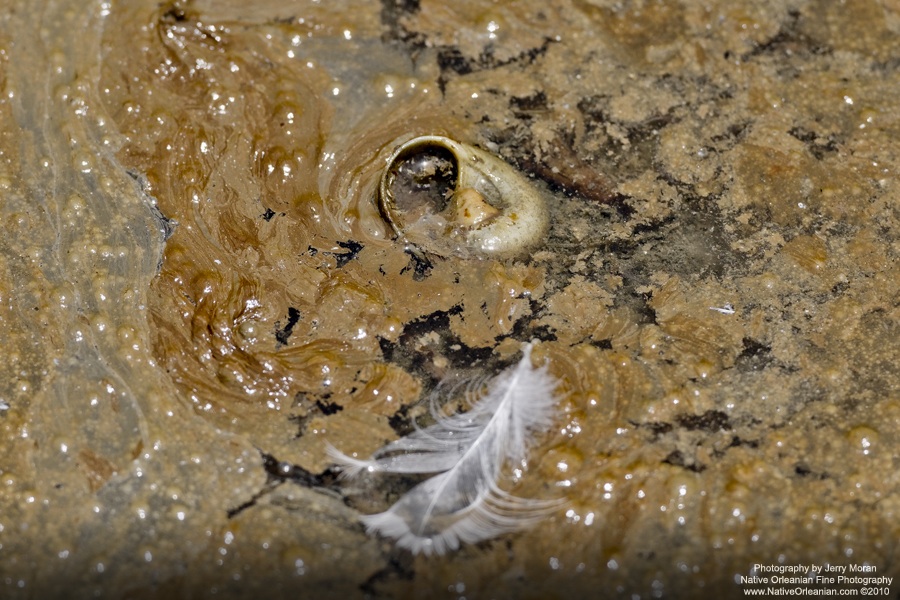
Under gray overcast skies eight months after the BP blowout in the Gulf of Mexico, waves of crude oil roll into estuaries, bayous, and onto the deserted beaches as winter sets in along the Gulf Coast. In Orange Beach, Alabama, large slabs of crude continue to come in on a regular basis.
FDA not considering Gulf seafood consumption in safety estimates, says coalition
A coalition of environmental groups accuses the U.S. Food and Drug Administration of failing to accurately estimate how much seafood coastal residents eat when setting safe levels for oil-related contaminants in fish, shrimp and crabs.
NEW TEST RESULTS: Royal Red Shrimp Collected by Commercial Fisherman in Open Gulf Waters Contaminated with Dangerous Levels of Petroleum Hydrocarbons
We’ve noted them individually but let’s connect some dots, because three huge news items are making the rounds that support claims that BP’s massive dispersant use hid much of its spill by sinking the oil to the sea floor.
Here’s how a few big relevant stories broke recently (then we’ll get to our troubling new test results):
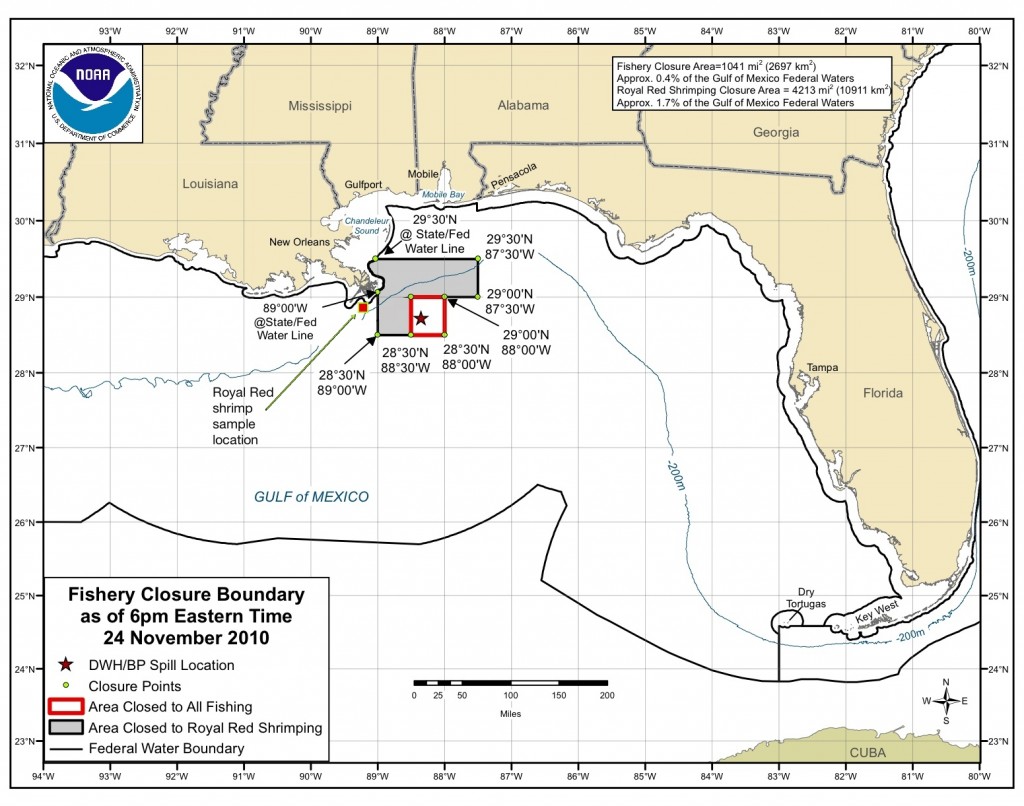
- Shrimp boat pulls up a large load of tar balls while fishing for royal red shrimp in legal open Gulf waters in late November (see article here: http://news.yahoo.com/s/ap/20101125/ap_on_bi_ge/us_gulf_oil_spill_gulf_closure);
- NOAA re-closes 4,000 square miles to royal red shrimp fishing west and north of the Macondo well site, representing the first major NOAA backtracking on its relentless “what oil?” and “the seafood is safe” messages; and then
- Independent scientists aboard Navy sub, Alvin, find evidence that dispersant use has caused BP’s oil to settle to the ocean floor, killing bottom-dwelling sea organisms en masse (see article here: http://online.wsj.com/article/SB10001424052748704447604576007761183035214.html).
We should note that royal red shrimp are caught in deep water by dragging nets along the ocean floor.
A recent Times-Picayune report quoted NOAA’s Roy Crabtree, the assistant administrator for the federal Fisheries Services southeast region: “We are taking this situation seriously. This fishery is the only trawl fishery that operates at the deep depths where the tar balls were found and we have not received reports of any other gear or fishery interactions with tar balls.”
The closure area was re-opened to all fishing on Nov. 15. And remember those smell tests? Government officials used the infamous “sniff” test on shrimp, reportedly including royal reds, and the seafood passed the tests. As we’ve noted before, not everybody thinks those tests are worth much.
So, clearly, a lot of the oil sank to the bottom of the Gulf. Thousands of square miles are in question and literally tons of seafood. So much for the official declaration that “the vast majority of the oil is gone” and that Gulf seafood is safe for human consumption. Remember, earlier this week Navy Secretary Ray Mabus pressed all the military services to consume as much seafood as possible.
Before that happens, we should all take a look at the new test results below before bellying up to the raw bar. Our research team got this royal red shrimp sample (see below) in October from a commercial boat fishing west of the Macondo well site in Gulf waters legally open to fishing.
Sample description: Royal Red Shrimp
Sampled on: October 2010 by a commercial fishing captain
Sample location: West of spill site (see map below)
Testing by: ALS Laboratory of Edmonton, Alberta, Canada
This shrimp sample was collected by a commercial fishing boat captain in legal open Gulf waters (see map below). The petroleum hydrocarbon chromatogram of the royal red shrimp was a strong match to petroleum hydrocarbons found in the sea water sample that was taken at the same time and place as the shrimp sample. The top chromatogram is for TPH in seawater, while the lower chromatogram is for the royal red shrimp. The shrimp had total petroleum hydrocarbons at 439 mg/Kg, (PPM), and 58 ug/Kg, (PPB), of naphthalene, a PAH. Additional shrimp samples from Pensacola, FL, had up to 6,520 mg/Kg, (PPM), petroleum hydrocarbons. Shrimp in commerce in Louisiana had up to 8,356 mg/Kg, (PPM), petroleum hydrocarbons, and 17 ug/Kg, (PPB), of PAHs.
These are UNACCEPTABLE levels of contamination for shrimp entering the human food chain.
See lab report here: Royal Red Shrimp Data
© Smith Stag, LLC 2010 – All Rights Reserved
Seafloor Samples Show Troubling Effects Of Oil Spill (AUDIO)
Scientists trying to determine the fate of the oil from the BP blowout recently dived in a mini-sub to look for it at the sea floor. And they found it — or I should say we found it, since I was along on the dive.
Researchers are diving to the bottom of the Gulf of Mexico aboard the Alvin, a deep-sea submarine, to study the effects of the BP oil spill.
Hard to Deny: Even Pro-Business Media Outlets Reporting There’s Oil Blanketing Gulf Floor
Everyone knew that the use of unprecedented amounts of dispersants would be one of the ongoing issues of the BP oil spill. Did it really break up the oil, or just hide it? Growing evidence indicates that, once again, federal officials who took the rosier view of the dispersant issue were dead wrong. With headlines like “Feds: Oil dispersant worked better than thought” hitting the streets only two weeks ago, you can almost hear them back-pedaling now.
One of the more significant mainstream media reports is from the Wall Street Journal, if only because of the paper’s typically pro-business view. The WSJ cites federal officials and a University of South Florida team reporting: “…material appears in spots across several thousand square miles of seafloor, they said. In many of those spots, they said, worms and other marine life that crawl along the sediment appear dead, though many organisms that can swim appear healthy. How the death of organisms in the sediment might affect the broader Gulf ecology is something scientists are studying.”
According to researcher Samantha Joye, a University of Georgia oceanographer, the impact is severe. She said the worms that live on the sea floor have been “just decimated.”
It’s interesting that the WSJ positions the use of dispersants thus: “Under federal direction, about 1.8 million gallons of dispersants were sprayed on the spilled oil in an effort to break it up into tiny droplets that natural ocean microbes could eat up. At the time, officials said the dispersants shouldn’t cause oil from the spill to sink to the seafloor. However, more recently, a federal report said dispersants may have helped some spilled oil sink to the sediment.”
I would question that “federal direction.” In reality, the federal government turned effective control over to BP, first asking the company to use the dispersant as little as possible and then rubber-stamping every type of use. Obviously, those who would argue that the company wanted to sink and hide the oil are supported by the new findings. The next question will be how tough the government gets with making sure that BP funds long-term studies to determine eventual damages.
And since BP is obligated to restore the natural resources, how exactly is the oil giant going to to remove this material from the environment, a mile beneath the surface? If anyone has an idea, please let me know.
The WSJ story is here: http://online.wsj.com/article/SB10001424052748704447604576007761183035214.html?mod=WSJ_hp_MIDDLENexttoWhatsNewsThird
© Smith Stag, LLC 2010 – All Rights Reserved
Strong Evidence Emerges of BP Oil on Seafloor
A university scientist and the federal government say they have found persuasive evidence that oil from the massive Gulf of Mexico spill is settling on the ocean floor.
Federal guidelines for Gulf seafood safety questioned
Louisiana residents have long bragged about their prodigious consumption of local seafood, but a survey by an environmental group suggests that government seafood testing programs in the wake of the Deepwater Horizon oil spill severely underestimated that rapacious appetite for fish – and may have underestimated residents’ risk as a result.
Law Firm Challenges Seafood Safety Claims
Stuart Smith of the Smith Stag law firm says the firm’s independent sampling of Gulf seafood contradicts the “safe” label that the National Oceanic and Atmospheric Administration (NOAA) and the Food and Drug Administration (FDA) give Gulf seafood in the wake of the BP oil disaster.
Armed services are urged to stock kitchens with Gulf seafood
Navy Secretary Ray Mabus, who doubles as President Barack Obama’s point man on Gulf Coast oil spill recovery, is pressing America’s armed services to consume as much Gulf seafood as possible.
Fungus outbreak hits Alabama marshes; could oil spill sheens be to blame?
A widespread fungal outbreak is affecting one of Alabama’s key marsh grass species, potentially rendering much of this year’s seed crop sterile, according to scientists.
NEW TEST RESULTS: Sea Nettles – A Common Food for Bottlenose Dolphins – Contaminated with Alarming Levels of “Persistent Toxic Components of Crude Oil”
Sample description: Composite of 3 sea nettles, (jellyfish)
Sampled on: September 22, 2010 by Boston Chemical Data
Sample location: Gulfport Beach, Mississippi, on intertidal beach
Testing by: ALS Laboratory of Edmonton, Alberta, Canada
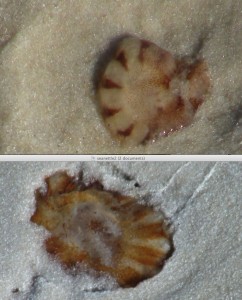 Three sea nettles – a common food for bottlenose dolphins in the Gulf – were sampled, tested, and found to be contaminated with 46.0 mg/kg of polynuclear aromatic hydrocarbons, (PAHs.) This is among the more contaminated samples of marine organisms our research team has sampled. PAHs found include alkylated naphthalenes, phenanthrenes, and benzo(a)pyrene. These are persistent toxic components of crude oil that can bioaccumulate and move up the food chain to contaminate predatory animals. See test data here: jellyfishdata
Note: Forensic analysis found a match to BP crude oil for 1 of 3 triaromatic sterane ratios, 2 of 3 aromatic steranes, and 1 of 5 terpanes.
© Smith Stag, LLC 2010 – All Rights Reserved
After the Spill: Few Signs of Life on Gulf Floor (VIDEO)
In exclusive trip aboard research sub, scientist shows how oil has sunk. A mile below the surface in the Gulf of Mexico, there is little sign of life. “It looks like everything’s dead,” University of Georgia professor Samantha Joye said.
NEW FEATURED VIDEO: Independent Scientist Criticizes BP and Unified Command for Impeding Research Where and When It’s Needed Most
According to civil engineer Marco Kaltofen, limited access and inefficient bureaucratic processes are jeopardizing the scientific research critical to making informed decisions about what’s really happening in the Gulf of Mexico. BP and Unified Command continue to hinder the process of getting scientists on the ground to take samples in the most heavily impacted areas. With each passing day, valuable data is lost forever – data that could help hold BP accountable for the worst environmental disaster in U.S. history.
Kaltofen: “We’ve found that because of the emergency response and the nature of the way it’s been patrolled by BP and even sometimes by Unified Command, we’re not getting enough scientists on the ground with full access to get the environmental samples we need. If we don’t get the data, then we can’t be making valid decisions…”
The government has taken a “guilty until proven innocent” attitude, by baselessly accusing our research team of failing to acquire permits – the documents needed to access areas and take scientific samples – forcing us to slow down the data-gathering process. According to Kaltofen: “We’re trying to get more scientists out there, but now they’re being bogged down in bureaucratic paperwork….We asked if [government officials] would like to see all of our data and all of our methods, but what they’re really interested in was seeing all of our permits and finding out whether we’d dotted every “i” and crossed every “t.” Well, we have, but the presumption that we hadn’t slowed our research down and is now causing other academic researchers to have to go back and check over paperwork when they should be in the Gulf collecting data…”
One could argue that this is just another tactic in the overall BP-government strategy to hide the truth about what is happening in the Gulf.
© Smith Stag, LLC 2010 – All Rights Reserved