RSS Feed for Safety Safety
Whatever Happened to the Gulf Oil Spill?
Back in May I met the CEO of a major environmental group for coffee in Washington. This was a few weeks after BP’s Deepwater Horizon rig had exploded but before the oil had really made landfall along the coast. The country’s attention was focused on the spill, and anything seemed possible.
Big Hit to Texas Oyster Industry Shows Government’s Big Credibility Problem
How big are the ripple effects from the BP spill? You can get an indication by looking at the Texas oyster industry, which was not hit directly by oil, but is feeling the effects of the BP-and-government credibility gusher.
The government squandered the people’s trust in this disaster, deciding at nearly every step to side with the BP – not just on large issues like flow estimates and the use of toxic dispersants and even declaring the “vast majority of oil gone” – but on smaller issues, too, like creating “safety zones” that barred reporters from cleanup areas.
So now the government sleeping in the bed its made. A case in point is that nobody believes them about seafood safety – and, consequently, the multi-billion dollar Gulf seafood industry is taking a HUGE hit. It turns out Honest Abe was right: You really can’t fool all the people all the time.
They feel this in Texas with an industry still recovering from Hurricane Ike. The Express-News out of San Antonio is reporting on the problem, and quotes a 10-year veteran of the oyster industry saying “… I’m not sure of the cause. All I know is oysters aren’t moving. People are not eating seafood.”
The paper also reports that “… Lisa Halili, vice president of Prestige Oysters of San Leon, which has operations in both Texas and Louisiana, said the industry is crippled now primarily because of unfounded concerns about the safety of gulf seafood.” She, of course, calls for an intense marketing campaign.
With all due respect to the marketing professionals, I think an aggressive campaign pushing seafood may very well backfire. Big, BP-style ads are not going to “make it right” with eating seafood. Unfortunately, the authoritative voice here – our government – has not proven itself worthy of our trust on spill issues. So with independent scientists once again contradicting the “official line,” the ads will add even more confusion to an already murky issue.
Over the course of this disaster, the government has pushed its credibility to the breaking point, essentially telling the American people that “sure, we were wrong about the flow rates, dispersant use, massive underwater plumes, oil settling on the ocean floor, the oil being gone, BUT we’re right about seafood safety.”
I have commercial fishing clients who would love to be out on the water today, doing what they do best. But my clients can’t resume fishing until they know its safe – they are not about to take their customers and their families into a risky situation. Let’s not forget that if people start getting sick from eating Gulf seafood, we can expect the industry to experience a protracted decline. Consumers won’t come back for a long time.
And there’s no way that BP and government officials can buy their way out of this problem with a marketing campaign.
The story out of San Antonio is here: http://www.mysanantonio.com/business/article/Oyster-producers-hurting-in-wake-of-oil-spill-907185.php
© Smith Stag, LLC 2010 – All Rights Reserved
Gulf oil spill: Deep water cleanup still needed?
The debate over how much oil remains in the Gulf and where it is continues as research groups, environmental organizations, and government scientists conduct separate missions.
For Some Investigators, BP Oil Spill Is Just Beginning (AUDIO)
It’s been nearly eight months since the Deepwater Horizon tragedy killed 11 workers and spilled millions of gallons of oil in the Gulf of Mexico. Since April, federal agencies have launched a series of separate investigations and this week the U.S. Chemical Safety Board held its first round of public hearings.
Size Protects Government Contractors That Stray
WASHINGTON — Weeks into the largest oil spill in American history, government officials met in Washington to discuss ways to compel BP, which leased the drilling rig, to move faster in stopping the spill.
Fishery edges forward as season winds down
HOUMA – Eight months after the Deepwater Horizon disaster claimed lives and livelihoods, one of south Louisiana’s most affected regions is toddling toward normalcy as the shrimp season winds down.
Not enough oil left in offshore, deepwater Gulf to warrant additional cleanup, admiral says
There’s just not enough recoverable oil from the BP Deepwater Horizon blowout left in most offshore and deepwater areas to warrant additional cleanup operations, National Incident Commander Rear Adm. Paul Zukunft announced Friday.
Oyster industry stalls
Still rebuilding from a pummeling that Hurricane Ike inflicted two years ago, the Texas oyster industry is being slammed again this year — by even more complex challenges in the aftermath of the BP Deepwater Horizon disaster.
IS ANOTHER DISASTER INEVITABLE?: Offshore Drilling Infrastructure in the Gulf Is Crumbling…and Has Been for Years
Forget for a moment BP’s bogus promise to “make it right” on the Gulf, a new Wall Street Journal story documents just how far we have to go to “get it right” when it comes to offshore drilling.
Ben Casselman reports in-depth about our nation’s drilling rig infrastructure, and it’s not comforting: “The deadly explosion of the Deepwater Horizon drilling rig in April set off a fierce battle over deep-sea oil drilling aboard huge, state-of-the art vessels. But that debate has largely ignored what many experts say could be a bigger threat: The troubled state of offshore infrastructure that remains in place long after wells are drilled.”
And this, to add to your discomfort: “Roughly half of the Gulf’s more than 3,000 production platforms are 20 years old or more, and a third date back to the 1970s or earlier, long before the development of modern construction standards. More than half have been operating longer than their designers intended, according to federal regulators.”
What do government studies show about the connection between aging infrastructure and incidents of fires, accidents or potential disaster? Well, nothing – there apparently are none. That’s one of the things they teach lawyers: Don’t ask the question if you don’t want to hear the answer.
This amounts to a trillion-dollar issue, easily. And it would be one thing if the federal regulatory agencies could be trusted to keep an eye on things – but the BP spill teaches us that is not the case, even if they re-name major agencies. It’s an important story for the “next time” files.
© Smith Stag, LLC 2010 – All Rights Reserved
EXCLUSIVE TEST RESULTS: Red Snapper Sample from Off Pensacola Shows Dangerously High Levels of Contamination – Nearly 3,000 PPM of Total Petroleum Hydrocarbons
As the “seafood safety” debate intensifies, my research team continues to find dangerous levels of petroleum hydrocarbons in a variety of seafood samples – from jellyfish to royal red shrimp to oysters. The latest example (see below) is a highly contaminated 11-pound red snapper caught off the coast of Pensacola in September. The certified lab results show the viscera (i.e., internal organs) to be contaminated with nearly 3,000 PPM of total petroleum hydrocarbons – a dangerous level by any standard. Such high levels of toxicity in the internal organs indicate the snapper may have eaten contaminated food, like zoaplankton, which represents another troubling entry point into the food chain. These results clearly call into question the safety of the seafood coming out of the Gulf.
Sample description: Red Snapper – 11 lbs.
Sampled on: September 2010 by commercial fishing captain
Sample location: 30 + miles SW of Pensacola, FL
Testing by: ALS Laboratory of Edmonton, Alberta, Canada
The skin-on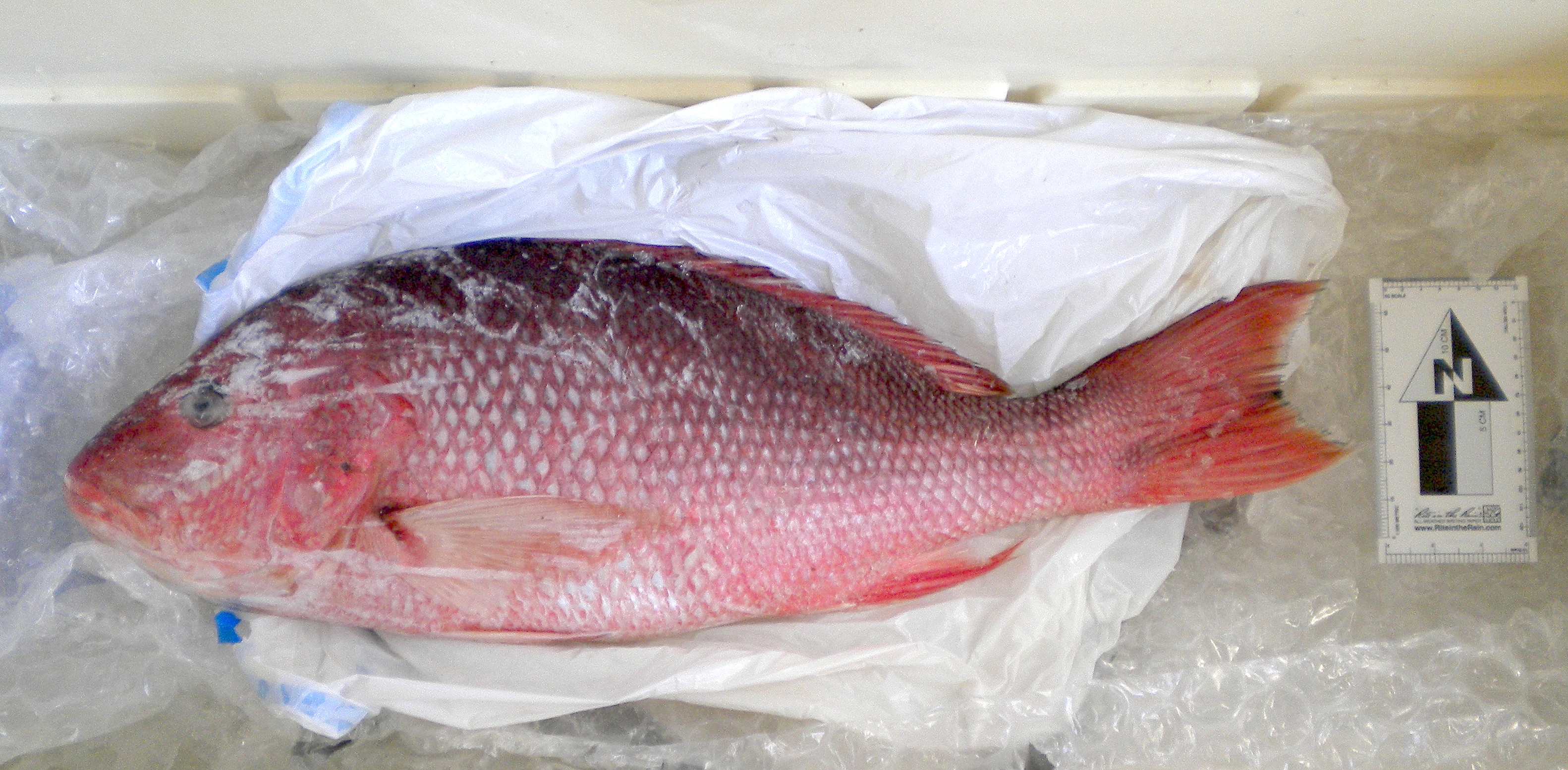 filet and viscera of the red snapper were tested separately. The filet was found to be contaminated with 87 mg/Kg, (parts per million), of total petroleum hydrocarbons, of which 53 mg/Kg were in the C17 to C35 range. The viscera were found to be contaminated with 2,970 mg/Kg, (parts per million), of total petroleum hydrocarbons, of which 1,784 mg/Kg were in the C17 to C35 range, and 263 ppm were in the C36 to C50 range. These are dangerously high contamination levels.
The petroleum hydrocarbons showed a characteristic series of major peaks at every third carbon number. This petroleum hydrocarbon pattern has shown up repeatedly among crabs, fish, and many oth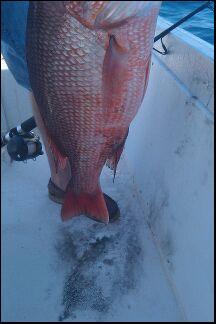 er contaminated organisms in the Gulf. This pattern may be indicative of the red snapper consuming contaminated prey, like zoaplankton, which are lower on the food chain. Other researchers have confirmed that zoaplankton – a common food for snappers – show substantial contamination from BP crude oil.
See certified lab results here: snapperdata
© Smith Stag, LLC 2010 – All Rights Reserved
Aging Oil Rigs, Pipelines Expose Gulf to Accidents
GALLIANO, Louisiana—On June 10, 1947, Stanolind Oil & Gas Co. won an auction for the right to drill for oil on a plot seven miles off the Louisiana coast. The company built a spindly steel platform and drilled a well in shallow waters. It struck oil, and in 1950, Stanolind sold its first Louisiana sweet crude for $2.67 a barrel.
FDA seafood testing procedures called inadequate for Gulf residents
A call for changes in the Food and Drug Administration’s seafood-testing procedure in the wake of the Deepwater Horizon oil spill was not news to activists and independent scientists, many of whom have been lobbying national authorities for months over the protocols.
Scientists to begin yearlong study of oil spill’s impact on Gulf
Research conducted throughout the next year on this summer’s record-setting oil spill will help scientists across Alabama better understand its immediate impact on the Gulf of Mexico, and help better prepare for similar catastrophes in the future.
Watering Down Seafood Safety
First it was the “sniff test” that had people wondering if the government knew what it was doing regarding testing Gulf seafood – now it’s consumption levels. The Press-Register newspaper in Mobile, which has been among the most skeptical news outlets in the context of the spill, is reporting: “…a coalition of environmental groups accuses the U.S Food and Drug Administration of failing to accurately estimate how much seafood coastal residents eat when setting safe levels for oil-related contaminants in fish, shrimp and crabs.”
We’ve brought this up before as an example of how the FDA can game the system. You want to control the outcome of an experiment? Then control the factors going into the equation.
Questions about seafood testing are nothing new (well, not here anyway), but I should note that they are going mainstream just as the “Mission Accomplished” crowd is preparing to spend tens of millions of dollars assuring people that Gulf seafood is safe. Who are you going to believe, a slick ad or the Natural Resources Defense Council and other groups issuing warnings?
The Press-Register has become a champion among those worried about seafood safety and has previously reported that FDA standards set after the BP spill allow higher levels of oil contaminants to be present in seafood than has been allowed after other major spills.
It’s also reported that, based on an FDA assumption, people eat FOUR times more fish than other types of seafood – and the agency standards allow shrimp, crabs and oysters destined for public consumption to be FOUR times more contaminated than fish. As mentioned, many experts believe the FDA assumption about how much seafood Gulf residents consume is far too low.
Those reports are shocking and should prompt swift government action. But this is the same Obama Administration that went along with low-ball spill estimates, put spin on NOAA reports and even had to effectively apologize to scientists after spinning their results. To admit that it’s now low-balling seafood contamination, might finally be the “tipping point” to really show that the BP spill is this Administration’s Katrina moment.
Read the Press-Register report here: http://blog.al.com/live/2010/12/fda_not_considering_gulf_seafo.html
© Smith Stag, LLC 2010 – All Rights Reserved