RSS Feed for Illnesses Illnesses
EXCLUSIVE TEST RESULTS: Red Snapper Sample from Off Pensacola Shows Dangerously High Levels of Contamination – Nearly 3,000 PPM of Total Petroleum Hydrocarbons
As the “seafood safety” debate intensifies, my research team continues to find dangerous levels of petroleum hydrocarbons in a variety of seafood samples – from jellyfish to royal red shrimp to oysters. The latest example (see below) is a highly contaminated 11-pound red snapper caught off the coast of Pensacola in September. The certified lab results show the viscera (i.e., internal organs) to be contaminated with nearly 3,000 PPM of total petroleum hydrocarbons – a dangerous level by any standard. Such high levels of toxicity in the internal organs indicate the snapper may have eaten contaminated food, like zoaplankton, which represents another troubling entry point into the food chain. These results clearly call into question the safety of the seafood coming out of the Gulf.
Sample description: Red Snapper – 11 lbs.
Sampled on: September 2010 by commercial fishing captain
Sample location: 30 + miles SW of Pensacola, FL
Testing by: ALS Laboratory of Edmonton, Alberta, Canada
The skin-on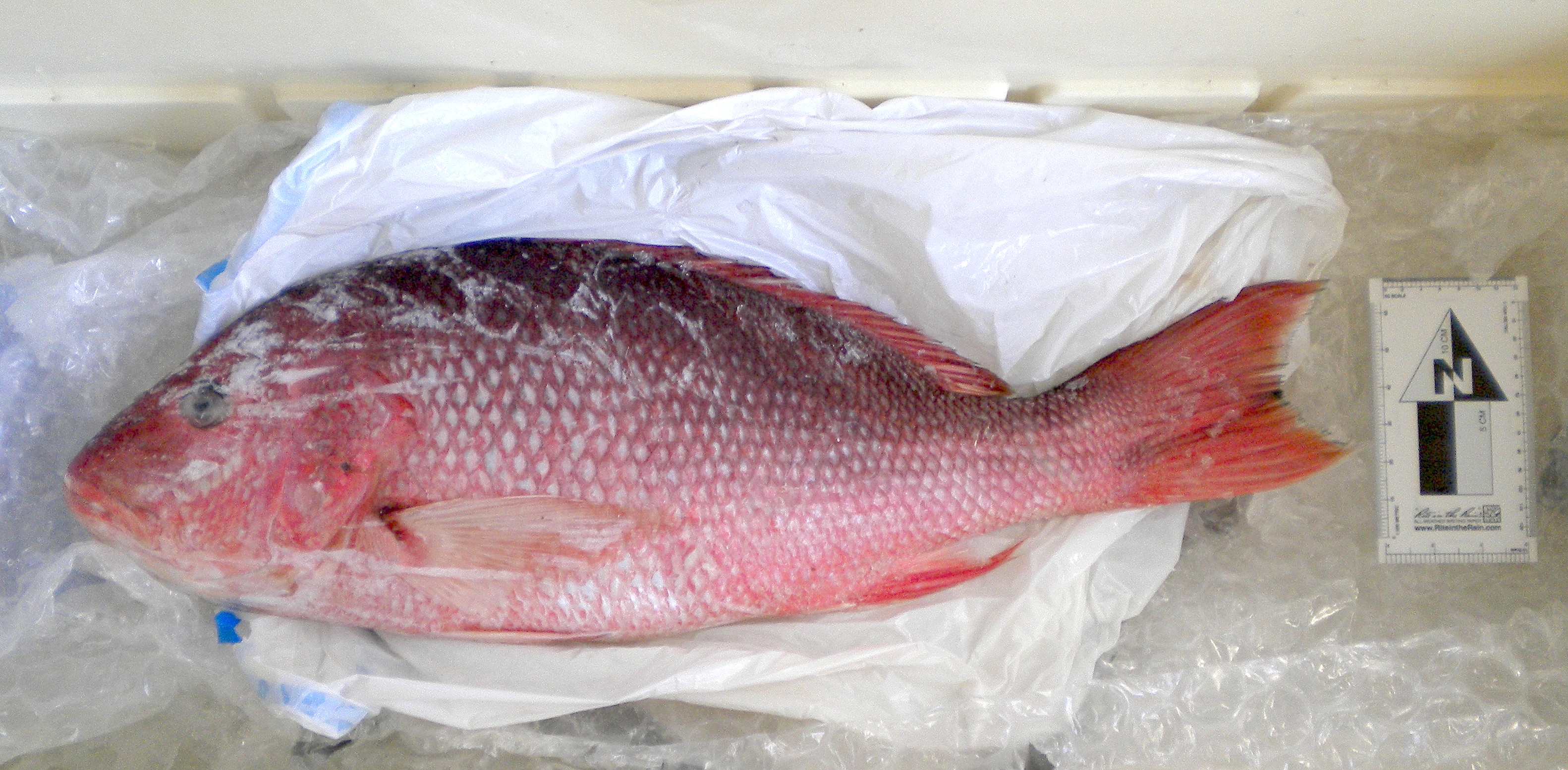 filet and viscera of the red snapper were tested separately. The filet was found to be contaminated with 87 mg/Kg, (parts per million), of total petroleum hydrocarbons, of which 53 mg/Kg were in the C17 to C35 range. The viscera were found to be contaminated with 2,970 mg/Kg, (parts per million), of total petroleum hydrocarbons, of which 1,784 mg/Kg were in the C17 to C35 range, and 263 ppm were in the C36 to C50 range. These are dangerously high contamination levels.
The petroleum hydrocarbons showed a characteristic series of major peaks at every third carbon number. This petroleum hydrocarbon pattern has shown up repeatedly among crabs, fish, and many oth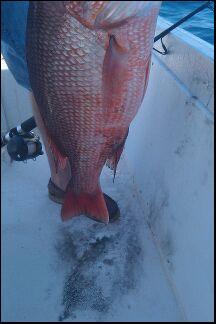 er contaminated organisms in the Gulf. This pattern may be indicative of the red snapper consuming contaminated prey, like zoaplankton, which are lower on the food chain. Other researchers have confirmed that zoaplankton – a common food for snappers – show substantial contamination from BP crude oil.
See certified lab results here: snapperdata
© Smith Stag, LLC 2010 – All Rights Reserved
Disaster on the Installment Plan
A Huffington Post report by environmental activist Jerry Cope is going viral, in part, because he recently testified before Congress and is eloquently offering an alternative to the “official” Gulf Coast narrative being told by BP and a host of government sources.
While also offering a harsh review of the BP claims process, Mr. Cope reviews the pressures of pro-business forces at work in the region, including intimidation of medical doctors to the point they dare not care for the sick.
Cope writes that “… locals avoid the water, the seafood, and struggle to pay their bills. Doctors continue to deny service to patients who are sickened by exposure to toxic Volatile Organic Compounds (VOCs) for fear of retribution from BP and local business interests – a very legitimate concern. Hospital emergency rooms refuse to perform the necessary tests to determine the validity or extent of chemical poisoning.”
Mr. Cope also reminds us that the various commissions and task forces looking into the BP spill are subject to intense political pressure. And he notes that desperation mounts all along the Coast and “more and more people evacuate due to economic hardship and sickness.”
Of Washington, he says: “… many of the officials we met with were clearly surprised at hearing firsthand accounts that contradicted statements by both BP and numerous federal agencies regarding the safety of seafood, the continued use of toxic dispersants, serious and widespread health impacts, and the inane claims process. When informed of the continued use of Corexit dispersant long past the supposed date of termination in mid-July, a senior member of [a congressional panel] looked at me and said ‘that’s a crime,’ assuring me that it would be brought to the president’s attention. Indeed, but it is only one of many crimes committed against a civilian population which has been hammered by repeated disasters in the past decade.”
We couldn’t agree more.
Cope’s narrative is a must-read, even if the only bright spot seems to be that an array of non-governmental agencies are starting to get their footing to refute the relentless “Mission Accomplished” messaging from BP and its friends in business and government.
See the HuffPo piece here: http://www.huffingtonpost.com/jerry-cope/stocking-stuffers-from-bp_b_793436.html
© Smith Stag, LLC 2010 – All Rights Reserved
FDA not considering Gulf seafood consumption in safety estimates, says coalition
A coalition of environmental groups accuses the U.S. Food and Drug Administration of failing to accurately estimate how much seafood coastal residents eat when setting safe levels for oil-related contaminants in fish, shrimp and crabs.
Seafood-Testing Flaw: Assumption of How Much Seafood Gulf Residents Eat Is Way Too Low
Most critics of the government’s seafood-testing program have focused on the tests themselves, confronting issues like using whole shrimp or using de-veined and shelled shrimp. But a new study by a respected environmental group looked at one of the simpler flaws: The assumption of how much seafood a Gulf family eats is just way too low.
It’s like food companies that want to lower “per serving” calories by lowering the serving size – so a normal can of black beans becomes 3 1/2 servings to get the per-serving calories under 100. It’s one thing to game us in the grocery aisle, but entirely another to water down tests for toxic seafood.
Bob Marshall at the Times-Picayune is reporting that “… a survey of 547 coastal residents in the four Gulf states by the Natural Resources Defense Council found they had seafood consumption rates far higher than those being used by federal and state regulators to determine if contamination levels pose a risk to human health…those results may indicate a large population of coastal residents has been left at risk by the state and federal health standards, the NRDC said.”
One NRDC official was quoted as saying “…my assumption is there are thousands if not hundreds of thousands of people who are not protected by the FDA guidelines.”
This should be huge news, and it illustrates once again the incredible disconnect between the federal position on seafood and reality.
How do you trust a process when a NRDC spokesperson has this to say about the real world: “When we looked at those parameters back in April, we realized the portion size for shrimp was about four jumbo shrimp eaten four times a month… but when we asked our partners on the Gulf Coast what they thought, they hooted and laughed, because they knew four jumbo shrimp won’t make one po-boy.”
The problem is that this lack of common sense leads to federal “testing” that is really only a sniff test, and the fact is it remains to be seen if seafood coming out of the Gulf is, indeed, safe for human consumption. Meanwhile, my clients who are commercial fishermen are still not fishing, because they are afraid of the effects. This report is yet another indication that they are correct to take a cautious approach – which is more than you can say for a testing process that dramatically low-balls consumption rates.
Read the report here: http://www.nola.com/news/gulf-oil-spill/index.ssf/2010/12/federal_guidelines_for_gulf_se.html
© Smith Stag, LLC 2010 – All Rights Reserved
Federal guidelines for Gulf seafood safety questioned
Louisiana residents have long bragged about their prodigious consumption of local seafood, but a survey by an environmental group suggests that government seafood testing programs in the wake of the Deepwater Horizon oil spill severely underestimated that rapacious appetite for fish – and may have underestimated residents’ risk as a result.
Law Firm Challenges Seafood Safety Claims
Stuart Smith of the Smith Stag law firm says the firm’s independent sampling of Gulf seafood contradicts the “safe” label that the National Oceanic and Atmospheric Administration (NOAA) and the Food and Drug Administration (FDA) give Gulf seafood in the wake of the BP oil disaster.
Armed services are urged to stock kitchens with Gulf seafood
Navy Secretary Ray Mabus, who doubles as President Barack Obama’s point man on Gulf Coast oil spill recovery, is pressing America’s armed services to consume as much Gulf seafood as possible.
Gulf seafood to star at White House holiday parties
From the White House to the Capitol on Wednesday, Washington’s political class was consuming lots of Gulf seafood.
White House Executive Chef Cris Comerford plans to serve more than 2,000 pounds of Gulf Coast shrimp and seafood during a series of holiday parties, which began Wednesday night with a reception for volunteers.
The Gulf Coast is Littered with Broken Lives, Dashed Dreams and Depression; BP Must Make Victims Whole – Financially, Mentally and Physically
Ever wonder how former BP CEO Tony Hayward is doing now that he got his life back? Sometimes you have to wonder how Tony is faring these days back in the UK when you hear how brutally hard life has become for thousands of residents across the Gulf Coast. NPR has a gut-wrenching glimpse of just how hard things have gotten for victims of Mr. Hayward’s oil spill.
One thing is for sure: Tony wouldn’t last a day down here.
The NPR story starts with the arrival of a Feed the Children truck in Bayou La Batre (Alabama) that quickly dispenses its 800 boxes of food. We meet Aaron and Lena Hofer. He’s an Iraq War veteran who is now unemployed due to the spill. Mrs. Hofer and her two sons are living with her mom while Aaron has moved onto their broken-down boat.
NPR makes the point that researchers believe one in three Gulf residents is still experiencing trauma from the spill. The story’s headline is “Oil Well Capped, But Trauma Still Flowing.” And indeed it is still flowing, unabated.
NPR talks to Steve Barrilleaux, who coordinates adult services at the Gulf Coast Mental Health Center. He says that the spill “… was totally unexpected, and people had no sense of control or no sense of how extensive the damage was going to be — how long-lasting it was.” And, he adds, there’s still no closure.
We can only guess what this stress means to the Hofers and their kids – Aaron says living through the spill is harder than his tour of duty in Iraq.
There are many, many more tragic stories like that of the Hofers all over the Gulf Coast. Our government must ensure that BP provides adequate funding to get spill victims the counseling and mental health assistance they need. And as we see more and more cases of mental health issues, physical illnesses are certain to follow. This is going to get much worse for folks before it gets any better.
Hear the NPR audio: http://www.npr.org/2010/11/29/131667797/bp-oil-well-capped-but-trauma-still-flowing
© Smith Stag, LLC 2010 – All Rights Reserved
Spill’s Devastating Mental Health Toll Hits Particularly Hard in Baldwin County, Alabama; HALF of Residents Need Mental Health Assistance
How do you know the BP oil spill is having a devastating impact on mental health in the region? When you canvas approximately 500 Gulf area residents, and professionals determine roughly HALF need some form of professional mental health assistance.
That was the result of a Baldwin County, Alabama project that interviewed 494 residents. The county has implemented a BP-funded effort to assess its mental health crisis, and the initial reports represent a cry for help from Gulf residents. Our elected officials should be paying attention and should move swiftly to get people the assistance they need, sooner rather than later. Mental health issues that go untreated can lead to a host of other problems and criminal behavior, including increased alcohol consumption, domestic violence, drug abuse and suicide.
The Press-Register is reporting the story, citing Steve Picou, “… a sociology professor at the University of South Alabama who has examined the impacts of the Exxon Valdez spill in Alaska for more than 20 years, said after-effects of the spill could last two to five years given the uncertainty surrounding tourism prospects and future charter boat and shrimp seasons.”
Of course, we should note that the county’s “Project Rebound” that aims to spur recovery, includes an entire section for assisting people with their BP damage claims, which is not singled out but no doubt plays a huge role in the mental health picture.
In addition to keeping an eye on mental health trends, we should be tracking physical health issues as well. Sadly, you can bet there will be dramatic increases in problems on both fronts. We would be wise to remain vigilant.
Check out the Press-Register story here: http://blog.al.com/live/2010/11/oil_spill_leaving_depression_a.html
© Smith Stag, LLC 2010 – All Rights Reserved
NEW FEATURED VIDEO: Veteran Toxicologist Warns of Increased Risk of Cancer and Birth Defects Tied to Later Stages of Spill; Unprotected Cleanup Workers at Highest Risk
Little attention has been given to the human health impacts of the BP spill. It’s a glaring gap in the research we’ve seen thus far, both on the part of independent scientists and government experts. With unprecedented amounts of oil and dispersants dumped into the Gulf and tens of thousands of people involved in the response, many believe we will see dramatic increases in health problems among Gulf residents, particularly cleanup workers. Doctors have already treated people with a variety of illnesses related to the spill.
A leading member of my research team, veteran toxicologist Dr. William Sawyer, has done extensive research into the human health effects of the spill, particularly toxic exposures. He warns of the grave health risks tied to the later stages of an oil spill, when we see things like tar balls and weathered crude floating on the surface. Although the oil has stopped flowing, there remain serious health risks in the Gulf. And we feel the lack of information and research coming from the government at this point is simply unacceptable given the high level of risk to a potentially huge group of people.
Dr. Sawyer: “…oil at the surface and in the tar balls…is contaminated with higher percentages of toxic polycyclic aromatic hydrocarbons (PAHs), some of which we’ve measured are carcinogens…Thus, this oil exposure is more toxic than that of fresh version crude.”
So, in other words, the current risk could be higher right now – at least regarding direct contact with the skin (i.e., dermal absorption) – than it was even at the earliest stages of the spill response.
According to Sawyer, the health effects are very serious indeed, including: increased risk of cancer, chromosomal aberrations, genetic damage.
There are also problems with identifying related illnesses because early symptoms are sometimes mistaken for the flu. There’s also a latency period where a person will show no adverse health effects for several years, until malignancy occurs.
This is a video that neither BP nor the government wants you to see…
© Smith Stag, LLC 2010 – All Rights Reserved
Government Assessment: “Little Cancer Risk” From Controlled Oil Burns; Independent Scientists Remain Skeptical
Good news! The same government that brought you “5,000 barrels a day” and “the vast majority of the oil is gone” has also determined that there’s “little cancer risk” from dioxin released during the “controlled burns” of BP oil.
Once again, you have to read the language very closely. The Times-Picayune, for example, notes that “… however, the results are based on tests of a single composite sample of material captured in the plumes of 27 fires during four days in July, according to a separate paper describing the collection process, and the scientists writing that paper expressed concerns about the adequacy of the sampling.”
Some of my colleagues have done other burn tests recently, and we expect the findings to be very interesting. If independent tests refute these very rosy results from our government, it will be yet another black eye for the Obama Administration as it struggles with revelations that that White House edited the science to support its drilling moratorium.
The BP spill keeps giving President Obama opportunities to make his very own President Bush-like moments. We’ve had the “Mission Accomplished” moment with the announcement that the “vast majority of oil is gone” drivel, and now the current Administration seems to be consistently spinning the science to fit policy goals. We’ll see how this latest “burn” info holds up in the coming weeks.
Read the Times-Picayune story (carefully, of course) here: http://www.nola.com/news/gulf-oil-spill/index.ssf/2010/11/little_risk_of_cancer_from_dio.html
© Smith Stag, LLC 2010 – All Rights Reserved
What Are The Long Term Health Effects of the BP Oil Spill? (VIDEO)
Santa Rosa Beach – Dr. Rodney Soto, a licensed medical doctor, says the effects of organic volatile compounds found in petroleum product and chemical dispersents contain toxic material. He’s already treating patients with symptoms of exposure.