RSS Feed for Commentary Commentary
Guilty of Serial Low-Balling, Again!
The latest revelation about oil-flow estimates came Sunday on NBC’s “Meet the Press” when host David Gregory spoke to U.S. Rep. Ed Markey (D-MA), chairman of the Select Committee on Energy Independence and Global Warming.
What BP Could Pay — If It Had To
The $20 billion victims’ fund amounts to a lifesaver for BP. The agreed-to payment plan is $5 billion each year (including 2010) for four years. According to my CPAs, that is just a fraction, roughly a quarter, of what BP could pay if it had to.
BP’s annual income before taxes is as follows:
2009 $25 billion
2008 $34 billion
2007 $31 billion
2006 $35 billion
And remember, the amounts BP pays to cleanup the spill and the amounts it pays to settle claims are tax deductible. So according to the numbers, BP could afford to pay roughly $20 billion a year to cover costs associated with this disaster – and remain solvent. The $20 billion a year would mean shareholders wouldn’t get paid dividends (approximately $10 billion annually) and many retirement plans count on the cash dividends BP pays, but the bottom line is the corporation could afford to pay $20 billion a year.
That makes $5 billion a year sound downright reasonable.
© Smith Stag, LLC 2010 – All Rights Reserved
What’s killing the birds on Raccoon Island?

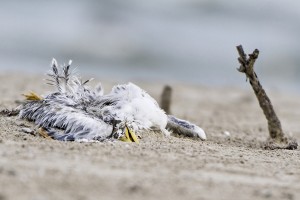
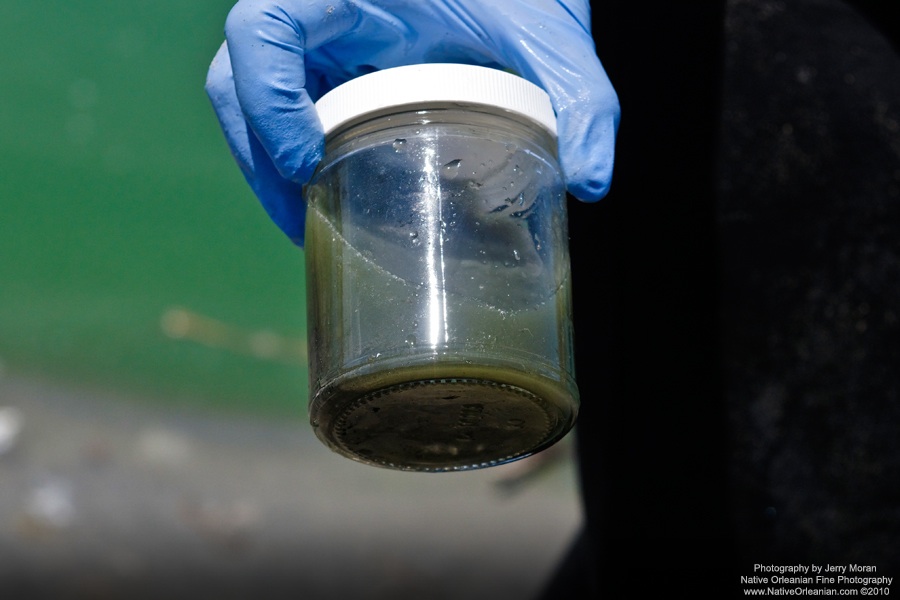
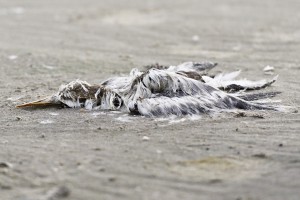
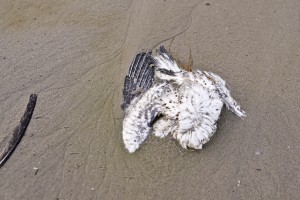
I’ll give you a clue: the answer isn’t “oil.” Jerry Moran, a local photographer for the Louisiana Environmental Action Network (LEAN), has captured startling photos of dead nesting birds on Raccoon Island, a protected breeding sanctuary for birds, including skimmers, seagulls and pelicans. What’s causing a stir among environmental groups and others is that these dead birds show no signs of oil on their bodies, trigging concern and questions about cause of death. Sadly, we’re familiar with images of oil-slicked birds fighting for their lives in the wake of oil spills…but we’ve never seen completely oil-free birds washing up dead in numbers on our shores. Moran’s photos were featured Friday night on the local Fox News affiliate in New Orleans http://www.fox8live.com/news/local/story/Sanctuary-under-seige/Aa7-RvR4tE6WGZ-QpK-6vA.cspx
It is my belief and the belief of Marylee Orr, head of LEAN (www.leanweb.org), that the reason for this “mass die off” of birds is dispersed oil and Corexit, the toxic dispersant used by BP to breakup the oil and hide it below the surface in massive underwater plumes. And unfortunately, we’ll be seeing more and more fallout from this unprecedented use of dispersant…more dead birds, dead fish, dead shrimp, dead oysters. Corexit’s impact on the Gulf’s fragile marine life is going to be devastating and long-lasting. As studies are conducted and completed, my guess is we will find that BP’s dispersant use caused widespread environmental damage and that it poses a human health risk above and beyond that caused by the oil itself.
To date, approximately 1.84 million gallons of total dispersant have been applied – 1.07 million on the surface and 771,000 sub-sea. Approximately 577,000 gallons are still stockpiled and available. Subsurface dispersant application was eliminated midday on July 15. According to EPA there has been no new use of dispersants. That offers little comfort to those of us seeing birds killed by dispersant dotting the beaches of Raccoon Island.
Jerry Moran, a native New Orleanian, is an accomplished photographer and artist whose main body of work is concentrated on his passion, the rich culture and heritage of his home, New Orleans, and the State of Louisiana. Moran’s pieces have been featured in magazines, art shows and galleries around the United States, and his iconic work is a fixture in many high end residential developments, restuarants, and private homes around the world. See more of Moran’s photos at www.nativeorleanian.com.
Photos by Jerry Moran ©2010 Native Orleanian Fine Photography.
James Carville, still ragin’
Did you see “political strategist” James Carville on CNN’s Anderson Cooper?
Wow. I recall when he once said that, as a Democrat, his role with President Bush was that, should Mr. Bush walk on water, he’d have to go on TV to explain that the president can’t swim.
Now he’s calling the administration’s response to the ongoing oil spill “lackadaisical” and calling President Obama “naive” to trust BP.
James said that he thinks administration offiicals “… actually believe that BP has some kind of a good motivation here. They’re naive. BP is trying to save money, save everything they can… They won’t tell us anything, and oddly enough, the government seems to be going along with it! Somebody has got to, like shake them and say, ‘These people don’t wish you well! They’re going to take you down!’”
I’ve always like Cooper’s 360 show, in part because he seems to hang around when the rest of the parachute-press is moving on (and, no, not because I’ve been on the show (LINK), although I did consider that a bit of an honor.)
© Smith Stag, LLC 2010 – All Rights Reserved
It’s getting “tense” down here
Could somebody tell me why so many officials refer to this ongoing oil spill, a new Exxon Valdez every three or four days, in the past tense?
You pick up the tone in virtually every aspect of the federal response. And with all due respect to the president, the “first job” is not just to stop the oil; it’s to let people know what sorts of toxic dangers the oil presents.
Is it too much to ask that we do both together?
We need a lot more testing, and of course we need to see all the test results from BP. If it were up to me, I’d not only create a huge monetary fine for withholding information, I’d make it clear that any information leading to human illness, or even death, would be prosecuted.
Money means little when you have as much of it as BP, but even the top executives would pause in the face of, say, a manslaughter charge.
If that seems extreme, then you haven’t been paying attention. I’ve hauled this industry into court for two dozen years now, and trust me some companies are perfectly capable of withholding information that could have saved lives … I know, because we’ve proven it.
© Smith Stag, LLC 2010 – All Rights Reserved
Human Health Is the Real Oil Spill Issue
As the Deepwater Horizon oil catastrophe moves into Week Four, a new unsettling milestone has been set: The United States Senate has convened hearings way, way before operators of the drilling rig or the U.S. government have a handle on stopping the flow of oil into the Gulf of Mexico. The hearings are convened under the title of “Economic and Environmental Impacts of the Recent Oil Spill in the Gulf of Mexico. ”Discovering what went wrong and what the spill means to the nation’s offshore drilling policies is still unanswerable.
Hello everyone and welcome
Hello everybody, and welcome to the first post for my new blog.
It’s gotten into early summer weather down here around the Gulf. The humidity that felt kinda unique and nice a few weeks ago has settled into its usual “we’ll live with it” cycle, but this summer we have something special to worry about — we have to wonder how our summer weather cycle interacts with tens of millions of gallons of oil right off the coast.
We have to wonder if that petro-hurricane of oil is going to reach certain currents and wash over the Keys and other areas like a toxic tsunami.
We attorneys try to train ourselves to deal with facts, but the maddening fact of this situation in the Gulf is that we just don’t know much. That’s why we need to greatly increase testing, research and stop relying on the good graces of the oil companies to find out what’s happening.
But I’ve written about all that, and all these surprisingly expensive media experts tell me this blog is not about that (but I’ll have links at the bottom), it’s “personal.” I think they hope I’ll vent a bit more here and a bit less, well, elsewhere.
That’s a good thing, because one of the more difficult thing about being on TV and talking to reporters is keeping what our parents would call a “civil tongue.” It’s hard when you know, or at least seriously suspect, somebody is lying about destroying the health of your neighbors and bankrupting them in the bargain, to treat that person in a civil tone.
It would, for example, be inappropriate on national TV to respond with “you ignorant oil-industry whore, you’re going to get us all killed and when we’re in hospice 15 years from now you’ll be retired and living with your latest trophy wife in Aspen.”
While satisfying, that would not advance the conversation.
My experts were right, this feels a little bit better. Now let’s get down to business:
Trusting BP is getting us nowhere. The state is in near revolt and parish-level officials are seizing BP boats that sit idle while oil comes ashore.
© Smith Stag, LLC 2010 – All Rights Reserved
No More Oysters at Your Neighborhood Red Lobster
You probably heard by now that the Florida-based Red Lobster restaurant chain will soon stop serving oysters. But the take-away should be just how much the Gulf means to the nation’s seafood supply.
Industry officials figure that from 60 to 70 percent of the oysters consumed in the United States come from the Gulf of Mexico. They come from all around the Gulf, from Florida to Texas – but Louisiana supplies about half of the total.
This is a high-profile example, but it’s only the start as the country feels the pressure from the oil spill. It will be interesting to see how such economic impact is handled in the new $20 billion BP escrow fund … or if such mega-issues are addressed at all.
© Smith Stag, LLC 2010 – All Rights Reserved