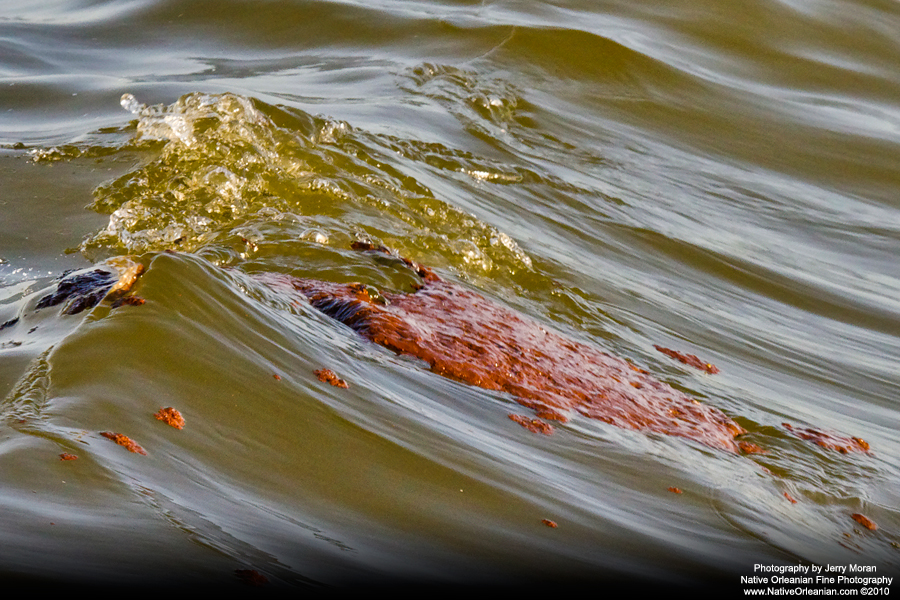
RSS Feed for Containment Efforts Containment Efforts
In Gulf Of Mexico, ‘They Are Literally Shrimping In Oil’
Earlier this week, we made note of BP CEO Bob Dudley’s complaint that the media, in their routine efforts to document the truth about what was happening in the Gulf of Mexico, had created such a gigantic “climate of fear” that he had no other choice but to wage a widespread campaign to harass and intimidate reporters.
NEWS ALERT: Feds Are Allowing BP to Leave Oil on Gulf Beaches
Just when you thought it couldn’t get any worse, a “plan” has surfaced to intentionally abandon oil-cleaning efforts on some beaches that are crucial for wildlife but not frequented by tourists.
Ben Raines at Alabama’s Press-Register reports: “While public ‘amenity’ beaches – such as the tourist beaches in Gulf Shores, Orange Beach or Gulfport – are to be cleaned until they are oil-free, other areas will not get scrubbed as thoroughly, according to the final draft of a plan written by federal officials.” In many ways, this amounts to a BP bailout plan. It’s absolutely outrageous!
Mr. Raines reports that “the ‘SCAT Shoreline Treatment Implementation Framework’ was signed in early October by BP PLC, the U.S. Coast Guard and officials from the state environmental agencies in Alabama, Mississippi, and Florida.” According to the Press-Register: “The agreement establishes ‘No Further Treatment’ thresholds for beaches, marshes and manmade shorelines.”
There are many things about this that leave you shaking your head. But let’s just look at one or two statements that have become much more telling than they were ever meant to be. First, we hear from BP to learn just who matters in this planning process. The Press-Register quoting BP spokesman Todd Beyer: “It was signed off on by all stakeholders. That’s the Incident Command and all other state and federal agencies involved in the process. They signed off on it, we’re assuming everyone is happy with the plan.”
Note, BP’s vision is that ALL stakeholders amount to Incident Command and state and federal agencies. No environmental voices, no fishermen, no residents, no mayors, certainly no parish presidents – in other words, nobody who might be in touch with all those “small people” (a reference made by BP’s chairman early on in this disaster).
And here’s another example of where NOAA stands on all this, again quoting the Register: “Federal manuals on shoreline cleanup after oil spills make clear that ‘natural restoration’ – meaning leaving oil in place – is often the preferred solution for sensitive areas. During a telephone conference in early October, Ruth Yender, the National Oceanic and Atmospheric Administration official who wrote the cleanup plan, said that cleanup goals would vary depending on shoreline type and use.”
Funny, I always thought the cleanup goal was to remove all the oil (and dispersant). So much for “Making It Right.”
For more, including some local reaction, see Mr. Raines’ story here: http://blog.al.com/live/2010/10/cleanup_plan_allows_oil_to_be.html
© Smith Stag, LLC 2010 – All Rights Reserved
BP’s Dudley Defends Spill Response
LONDON—BP PLC’s new Chief Executive Bob Dudley on Monday launched a robust defense of his company’s response to the Gulf of Mexico oil spill this summer, accusing the media and some people in the oil industry of fear-mongering and a rush to judgment that exacerbated the crisis.
Cleanup plan allows oil from Gulf spill to be left behind
Anyone hoping for total removal of all the oil deposited on beaches and marshes during the Gulf spill is likely out of luck.
NEWS ALERT: More Independent Scientists Report “Vast Volumes of Oil Present on Seafloor”; Independent Research AGAIN Directly Contradicts NOAA/Coast Guard Findings
Well, it seems we’ve got yet another national outrage on our hands as USA Today reports that: “Scientists who were aboard two research vessels studying the Gulf of Mexico oil spill’s impact on sea life have found substantial amounts of oil on the seafloor, contradicting statements by federal officials that the oil had largely disappeared.” Frankly, I find myself marveling that this is even news anymore when nearly every NOAA report or announcement (the letters stand for No Oil Around Anywhere) is immediately proven false. Anybody else see a pattern here?
This time, according to USA Today, the direct contradiction comes as “… the research ship Cape Hatteras found oil in samples dug up from the seafloor in a 140-mile radius around the site of the Macondo well.” The chief scientist on the research expedition was Kevin Yeager, a University of Southern Mississippi assistant professor of marine sciences. Oil found in samples ranged from light degraded oil to thick raw crude, Yeager told the newspaper.
“Clearly, there appears to be vast volumes of oil present on the seafloor,” Yeager said in the story. “We saw considerable evidence of it.”
The government, of course, continues its increasingly pathetic denial campaign. Just last week, the NOAA-based Coast Guard science adviser Steve Lehmann told the Times-Picayune that the agency has found no oil on the bottom of the Gulf. They were supposed to be looking in the same area.
The USA Today story may also provide new fuel for the ongoing debate (in some circles, anyway) whether NOAA is corrupt, incompetent or some worst-case mixture of the two.
Samantha Joye, the University of Georgia marine sciences professor and one of the first to find oil on the seafloor amidst the government denials, explained that “… part of the discrepancy between federal and academic scientists may come from how NOAA scientists lower the multi-ton machinery used to collect the samples, known as a ‘multiple corer,’ into the sea.”
Apparently lowering the sampling device too fast could disrupt the fine sediment on the seafloor and disperse oil particles. “These are really fine layers,” Joye tells USA Today. “If you don’t know what you’re doing, you’re not going to find oil.”
Right. But if you do know what you’re doing – and are determined not to find any oil – then maybe you drop the thing like an anchor?
Read the USA Today story by Rick Jervis here: http://www.usatoday.com/news/nation/2010-10-25-oilresearch25_ST_N.htm
© Smith Stag, LLC 2010 – All Rights Reserved
Research teams find oil on bottom of Gulf
NEW ORLEANS — Scientists who were aboard two research vessels studying the Gulf of Mexico oil spill’s impact on sea life have found substantial amounts of oil on the seafloor, contradicting statements by federal officials that the oil had largely disappeared.
EXCLUSIVE PHOTOS: Confirmed Fish Kill on Grand Isle; “Overpowering Stench of Death and Decay” Coming From BP “Death Mounds”
On the ground with New Orleans photographer Jerry Moran.
FROM JERRY:
All of these images were taken October 21, 2010 in the area of Latitude 29.199 N, Longitude 90.042 W.
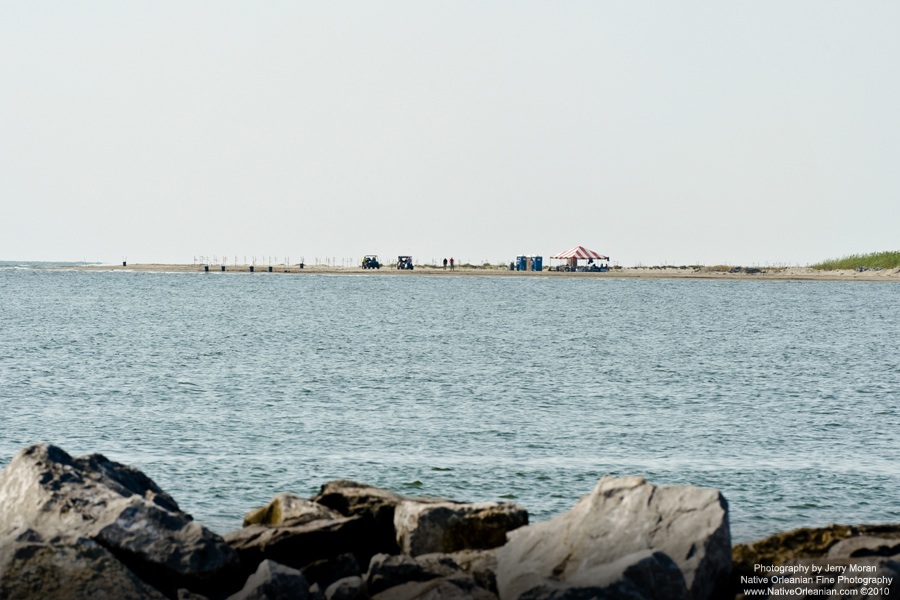
For the first time in a few weeks, I headed out to Grand Isle, Louisiana – primarily to document cleanup progress that has – or has not – been made since the spill response began.
Earlier in the week, I received information regarding a possible fish kill around Grand Isle, which I confirmed to be true. My first stop was the west end of the island. Upon arrival, I did not see many dead fish, but while walking along the jetties, I was hit by an overpowering stench of death and decay. Back in May, I smelled this same scent and found a mound of buried bull redfish and dolphin, so I decided to go back to that same spot to check it out.
When I was about 10 yards from a recognizable mound of sand, I started hearing the unmistakable buzz of flies.
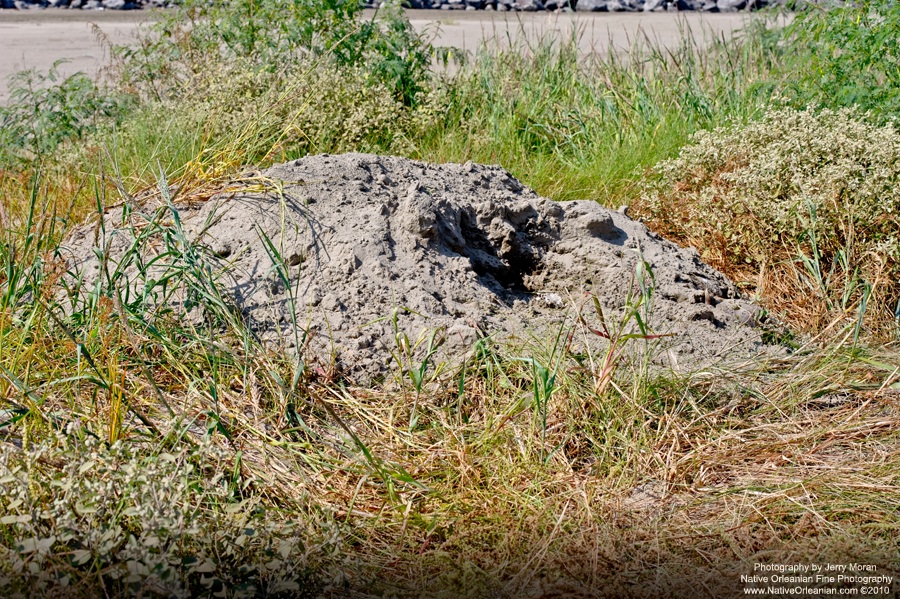
What I found was truly indescribable visually, I had never seen so many flies and the smell nearly brought me to my knees. There were at least 40 to 60 large redfish, drum – and who knows what else – under a BP “death mound” of sand in the exact same spot that I found the decapitated dolphin and bull redfish in May.
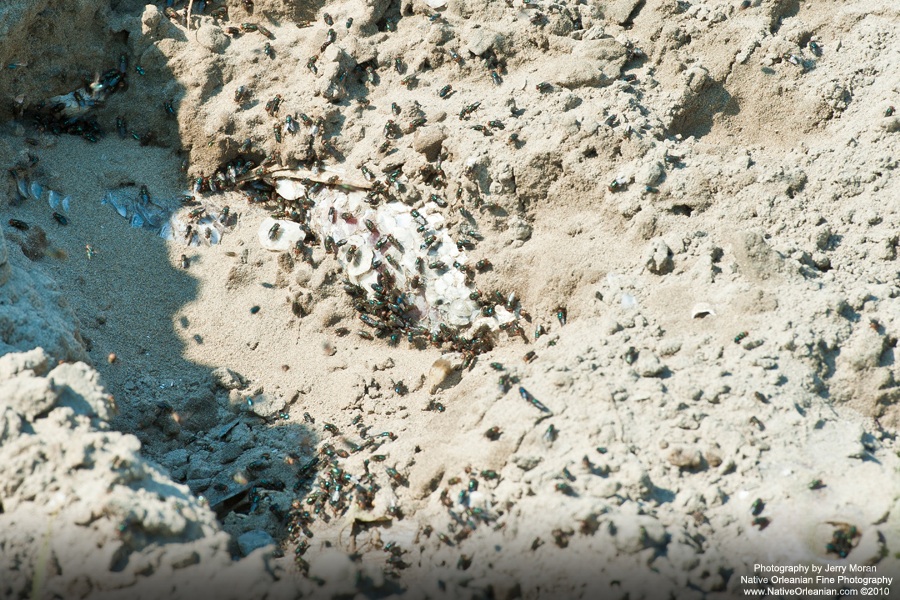
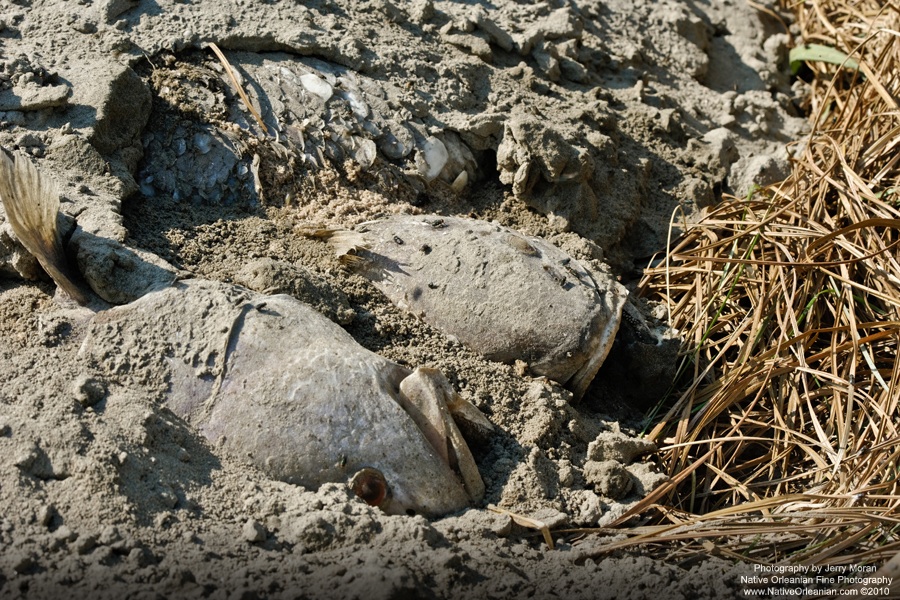
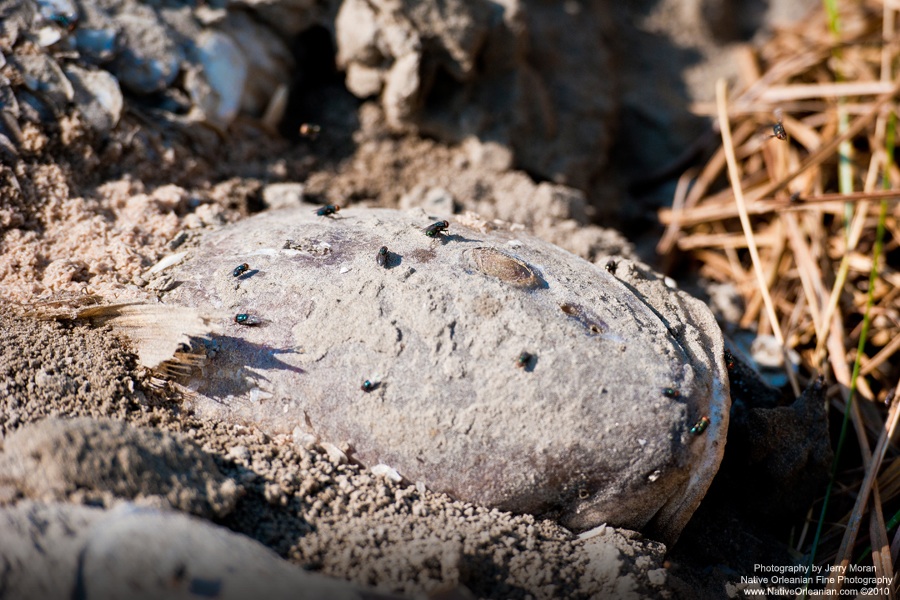
I find it very disturbing that BP cleanup crews are simply burying large numbers of dead fish and other marine life without letting anybody know.
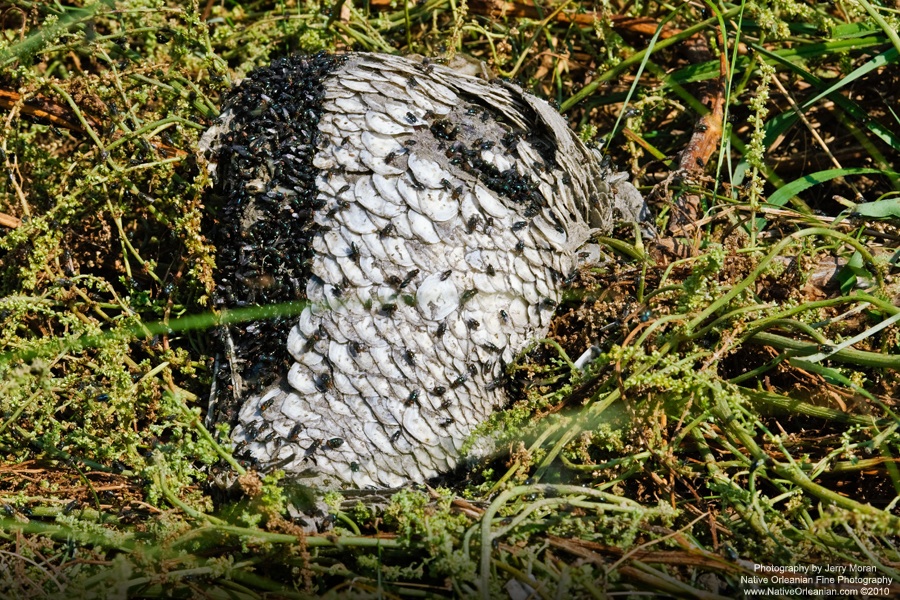
There was also another death mound about 20 yards away closer to the beach at Latitude 29.199 N, Longitude 90.047 W. The media continues to consistently disregard or overlook these occurrences, reporting that everything is just fine in the Gulf. I know these reports are untrue, based on what I am finding six months after the spill.
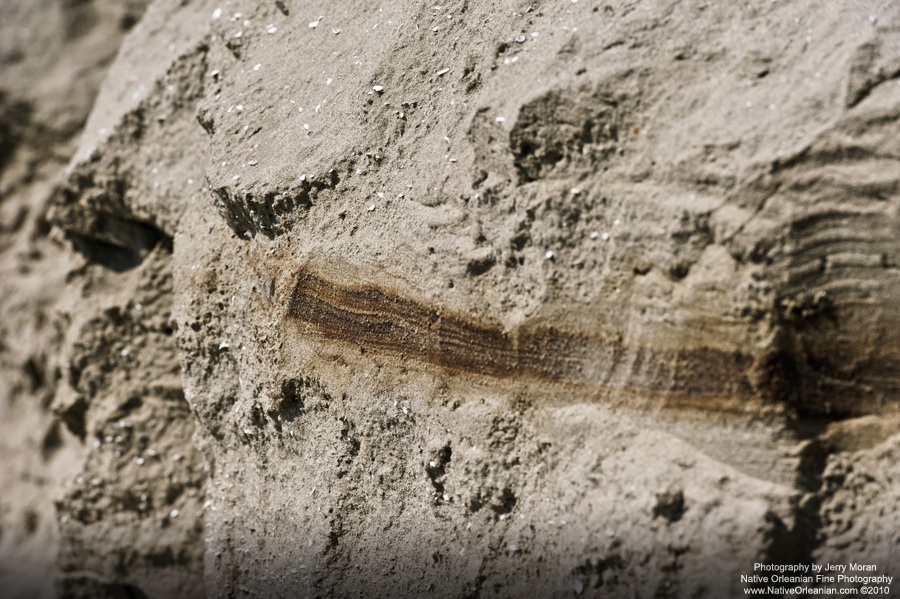
Additionally, more evidence of land farming (or burying oil) on the west end of the island is seen in the images of the levee resembling the Grand Canyon rock strata, Latitude 29.195 N, Longitude 90.055 W.
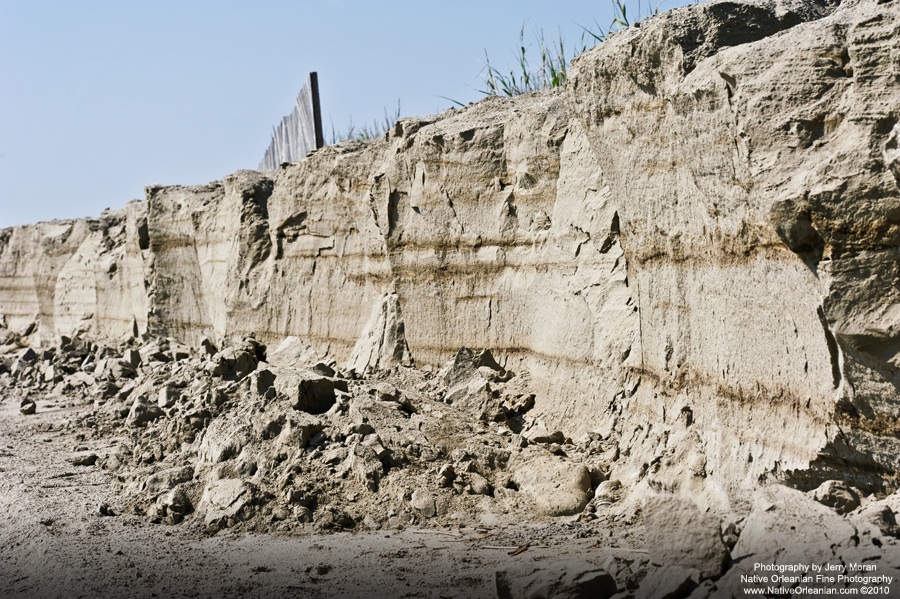
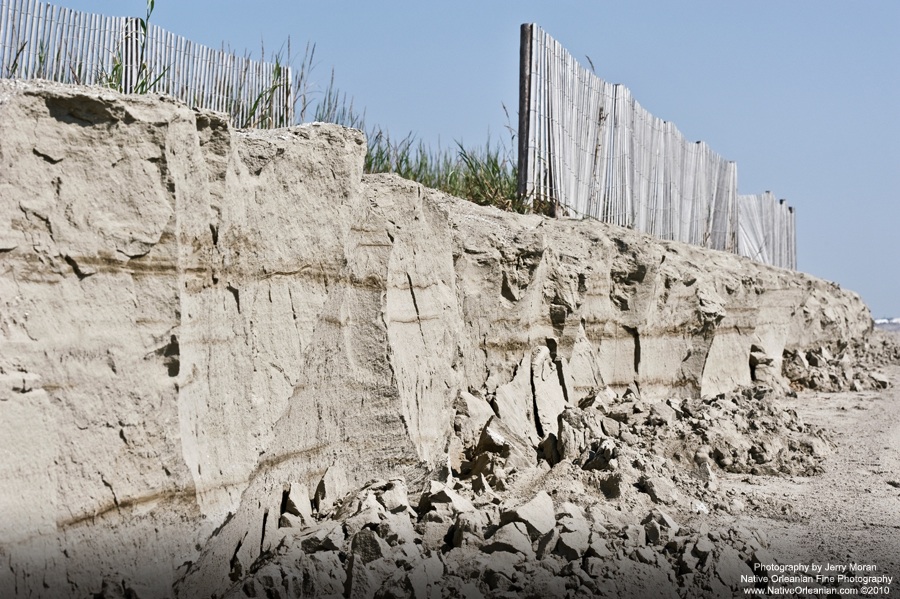
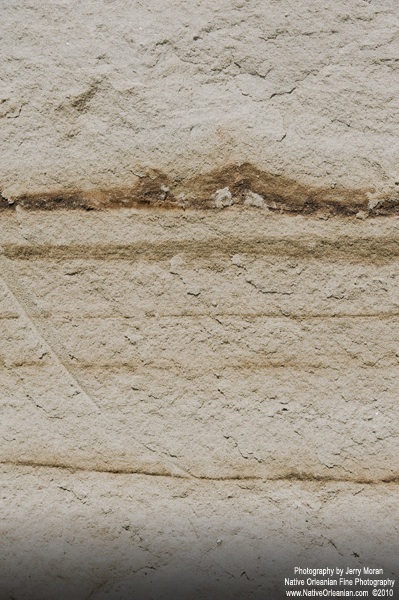
Images at Latitude 29.266 N, Longitude 89.953 W are from the east end of the island behind State Park, which is still closed to the public. I couldn’t get to the beach, but I observed heavy machinery, and the constant and overpowering stench of death coming from the other side of the levee.
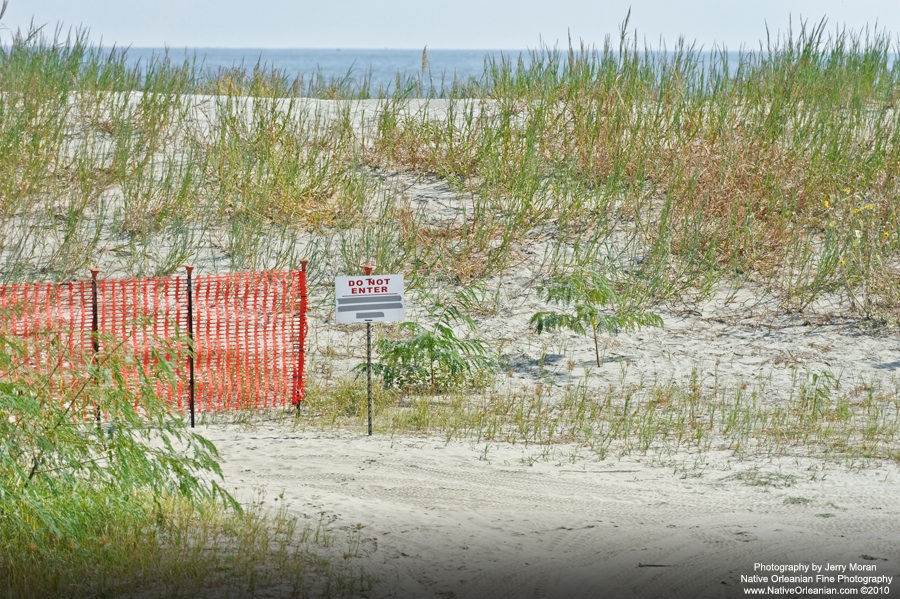
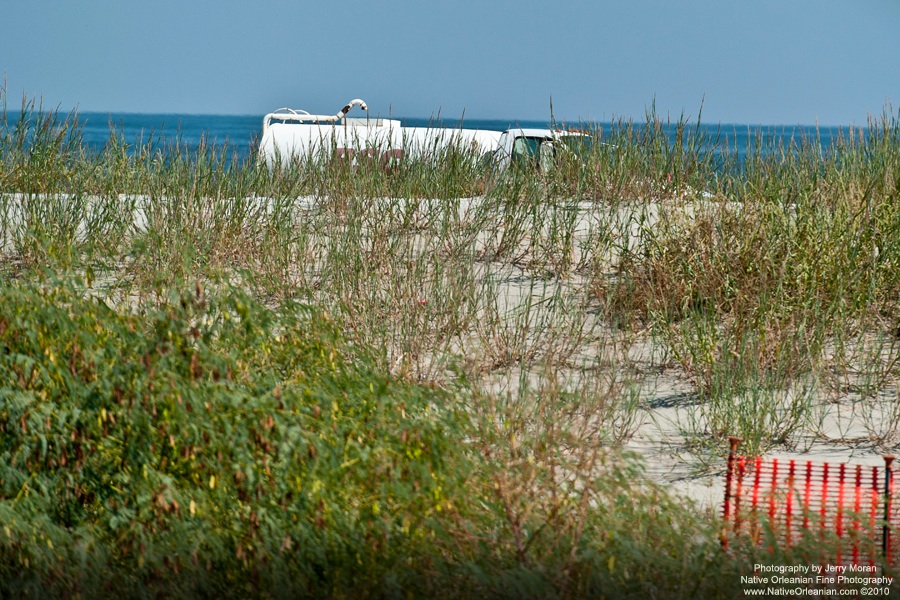
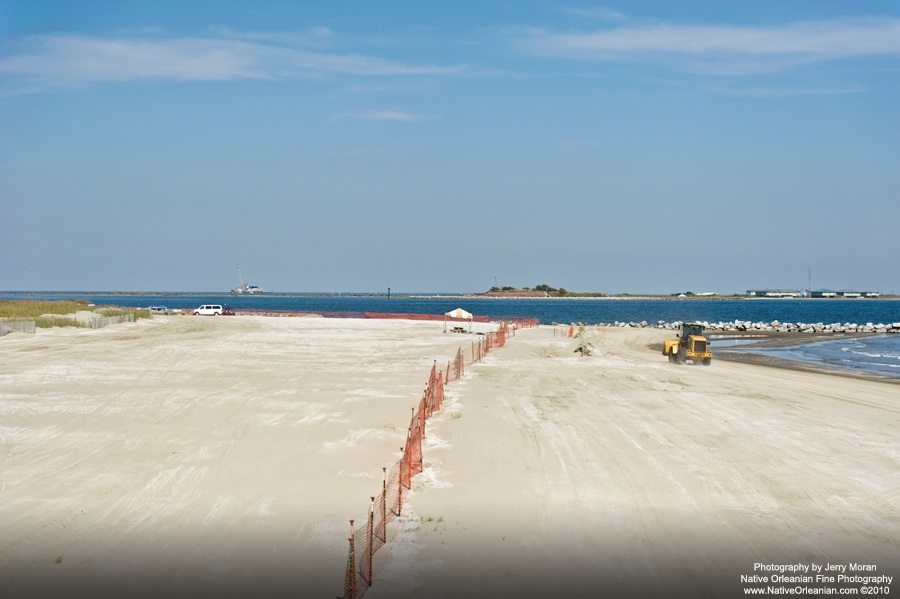
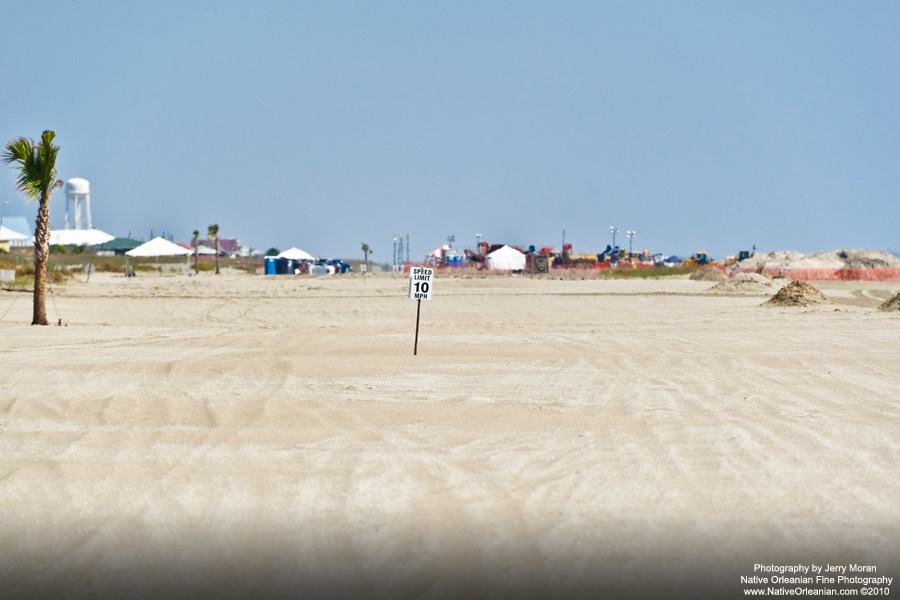
© Smith Stag, LLC 2010 – All Rights Reserved
Interest Turns Away, But Gulf Coast Still Suffers
Six months ago, when the Deepwater Horizon oil rig blew up and sank in the Gulf of Mexico, few realized just how bad things would get. But over the days, weeks and months that followed, millions of barrels of oil gushed into the ocean, along with hundreds of tons of dispersants.
NEWS ALERT: “Massive Stretches” of Oil Near Marshes Directly Contradict Coast Guard Report
The Times-Picayune is reporting that “miles-long strands” of oil have been spotted near Mississippi River marshes, contradicting a Coast Guard report just this week that there is “little recoverable surface oil” remaining in the Gulf. The New Orleans newspaper also reports that boat captains say the U.S. Coast Guard has been ignoring similar sightings for weeks.
According to the TP, this means some areas of the Gulf recently re-opened to fishing might have to be closed (again), a political nightmare for the government and a big PR setback for BP. The oil giant is showing heightened signs that it just doesn’t give that much of a damn in the virtual absence of congressional oversight.
Now, everyone noted the “wiggle word” of “recoverable” in the government’s latest “Mission Accomplished” statement. But you could easily argue that this is the biggest screw-up since the Obama Administration made the “vast majority of oil is gone” announcement in early August.
The Administration was singed a bit on that, and this major oil sighting comes one week before mid-term elections. We’ll see if video of the latest “Mission Accomplished” statement juxtaposed with miles and miles of lingering oil plays to the voters. It’s when you lie over and over again that even the American public gets fed up.
Oftentimes it’s dueling scientists who contradict the government. This time it was Louisiana fishermen who found “miles-long strands” of weathered oil floating toward delicate Mississippi River delta marshes.
Bob Marshall at the Times-Picayune cuts to the chase on the impact, reporting that this gives “… ammunition to groups that have insisted the government has overstated clean-up progress, and could force reclosure of key fishing areas only recently reopened.”
Believe it or not, it gets worse. It turns out the Coast Guard may have been ignoring similar reports for some time now. Mr. Marshall has this bombshell (emphasis added) : “The oil was sighted in West Bay, which covers approximately 35 square miles of open water between Southwest Pass, the main shipping channel of the river, and Tiger Pass near Venice. Boat captains working the BP clean-up effort said they have been reporting large areas of surface oil off the delta for more than a week but have seen little response from BP or the Coast Guard…”
Stay tuned on this one, and read up here: http://www.nola.com/news/gulf-oil-spill/index.ssf/2010/10/massive_stretches_of_weathered.html
© Smith Stag, LLC 2010 – All Rights Reserved
Grand Isle beach clean-up continues, six months after oil spill began (VIDEO)
GRAND ISLE, La. – Six months after the start of the BP oil spill, coastal areas of Jefferson Parish are still dealing with the effects. That is the case on Grand Isle where, amidst the quietly lapping waves, crews remain working on the shoreline.
Officials gather in Tampa, talk about lessons learned from gulf oil spill
TAMPA — The man from BP stood at the lectern Tuesday morning, telling the crowd packing the Tampa Convention Center ballroom about all his company had done to deal with the Deepwater Horizon disaster — the $11 billion spent so far, the 48,000 people deployed.
Oil still in coastal Terrebonne marshes (VIDEO)
TERREBONNE, La. – The flock of pelicans taking flight along the shore of Lake Raccourci in coastal Terrebonne Parish was a picture-perfect moment. But behind them was a disturbing sight on the shoreline: the edge of the marsh dead, with black clumps of oil tangled in the grass, strangling it.
After oil spill, Alabama, Mississippi landowners paid to create artificial marshes
WASHINGTON — Alabama and Mississippi are paying landowners $6.75 million in total to create artificial marshes, typically by flooding farm fields, for birds deprived of natural marshland by the oil spill, according to government information.
Oil Dispersants Report (VIDEO)
A commission investigating the B-P oil spill says the Obama Administration misrepresented findings about the B-P leak.
Channel Three’s Dan Thomas poured over the report and discovered many questions he’s been asking all along.